
The Underground Lake
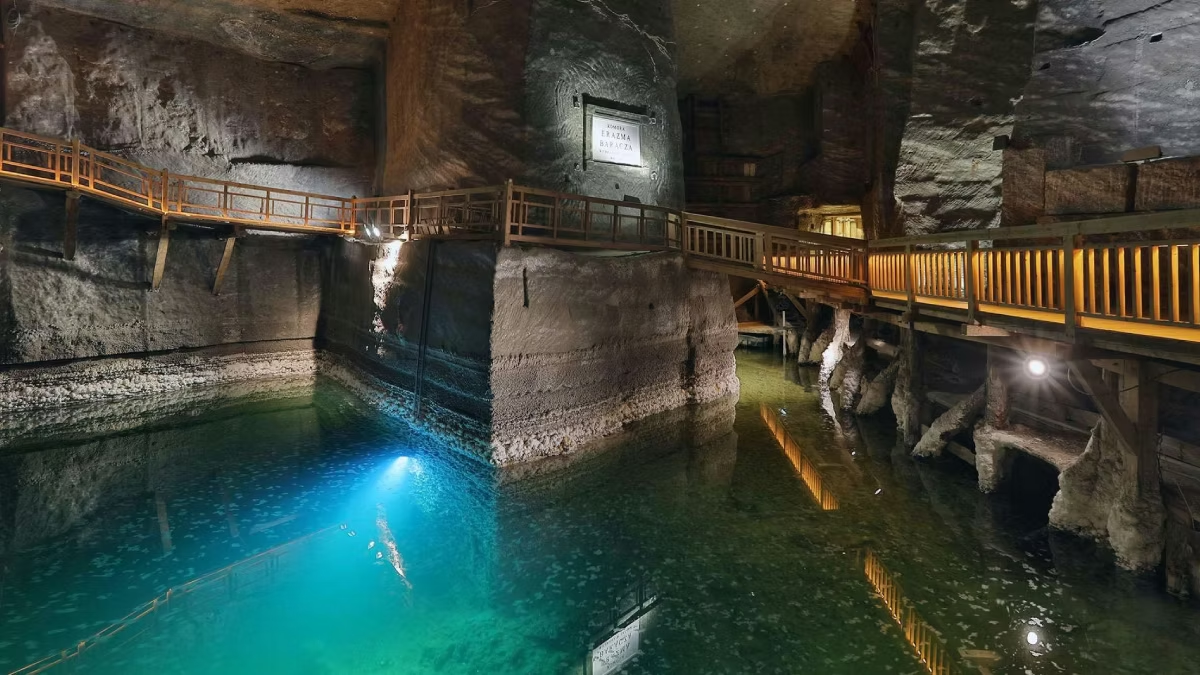
There is a moment in the Weimar Chamber when the tour group falls quiet. It happens naturally, without any instruction from the guide. The lake is so still, and the reflection so perfect, and the silence so dense, that conversation seems inappropriate. The water is impossibly green. The salt ceiling floats in it upside down. In a tour that is full of extraordinary things, this is the moment that consistently catches people off guard.
About the Weimar Chamber
The main underground lake at Wieliczka Salt Mine is in the Weimar Chamber on level 3, approximately 125 metres underground. The water is an extremely dense saline solution — denser than the Dead Sea — and appears greenish in colour due to dissolved minerals. The still surface perfectly reflects the illuminated salt ceiling. The lake is on the Tourist Route and is included in all standard tickets. It cannot be entered or touched.
The Weimar Chamber is located on level 3 of the mine, at a depth of approximately 125 metres, along the later section of the Tourist Route. It takes its name from the historical period of its documentation, and contains the mine’s most photogenic and atmospheric underground water feature.
The chamber is carved from the same grey rock salt as the rest of the mine. The lake occupies the lower section of the chamber, with a narrow walkway around its perimeter allowing visitors to observe the water from above. The chamber is relatively intimate in scale compared to the grand halls of St. Kinga’s Chapel or the Staszic Chamber — which heightens the enclosed, reflective atmosphere.
The main underground lake is in the Weimar Chamber on level 3, approximately 125 metres underground. It is part of the standard Tourist Route and included in all standard mine entry tickets.
The Water
The lake’s water is an extremely concentrated saline brine — the result of groundwater dissolving salt from the surrounding rock salt over millennia. The salt concentration is measurably higher than the Dead Sea, which is itself famous for its density. Objects placed in the water float with unusual buoyancy.
The greenish colour of the water is produced by dissolved minerals, particularly magnesium and calcium salts, that alter the refraction and absorption properties of the light passing through the water. The colour varies slightly depending on the light conditions and the viewing angle, ranging from pale grey-green to a deeper emerald in different light.
The surface of the water is completely still — there is no air movement at this depth, and the chamber is sealed from the wind that might disturb surface water above ground. This stillness, combined with the depth of the salt ceiling above, produces the mirror reflection effect that characterises the Weimar Chamber.
Photography
The underground lake is one of the best photography opportunities on the entire Tourist Route. Key considerations:
- No flash — reflected flash on the water surface destroys the mirror effect and damages the atmosphere of the chamber. All photography of the lake should be without flash
- Steady hands — the chamber’s lighting is designed to create mood rather than brightness; a slightly slower shutter speed may be needed for sharp images without flash
- The reflection — position yourself on the walkway to capture both the ceiling and its reflection simultaneously. The chandeliers visible above and inverted below are the classic shot from this chamber
- Group timing — the lake stop is brief; position yourself early to get unobstructed angles
The Legend of the Weimar Chamber
Like most of the mine’s significant spaces, the Weimar Chamber carries its own folklore. The chamber is reportedly a popular location for marriage proposals — guides confirm this happens regularly, and several claim to have witnessed it themselves. Whether this is because of the romantic atmosphere, the mirror-like surface, or simply the otherworldly quality of the space is unclear. The mine’s official website notes the detail matter-of-factly.
Other Water Features in the Mine
The Weimar Chamber is the most famous, but not the only underground water feature on the Tourist Route. Several other chambers contain smaller saline pools or water-filled passages:
Józef Piłsudski Chamber: Contains two large cavities partially filled with saline water, connected by a low passage. In earlier periods of the mine’s tourist history, visitors could cross these sections by boat — an underground river ride that is no longer possible given visitor volumes.
Additional underground brine pools: The mine’s water management system is continuous — groundwater infiltration is the primary threat to the mine’s structural integrity, and several hundred miners work daily to control water ingress. Parts of the mine not on the Tourist Route contain more extensive water features.
Frequently Asked Questions
How deep is the underground lake at Wieliczka Salt Mine?
The exact depth of the Weimar Chamber lake is not publicly documented. The chamber itself is approximately 125 metres underground. The water’s extreme salt concentration means it is notably denser than seawater and significantly denser than the Dead Sea.
Can you swim in the underground lake at Wieliczka Salt Mine?
No. The lake is not accessible to visitors — a walkway allows observation from the perimeter but direct contact with the water is not permitted. Swimming is not offered or possible on any part of the Tourist Route.
Why is the underground lake green?
The greenish colour is produced by dissolved minerals — particularly magnesium and calcium salts — in the extremely concentrated brine. The mineral content alters how light is absorbed and reflected by the water, producing the characteristic green-grey hue.
Is the underground lake the saltiest water in the world?
The exact salt concentration varies, but the Weimar Chamber lake is described as denser than the Dead Sea, which is approximately 34% salinity. The lake’s concentration reflects millennia of groundwater dissolving the surrounding rock salt deposit.
Where exactly on the Tourist Route is the underground lake?
The Weimar Chamber is on level 3, in the later section of the Tourist Route — after the main chapels and sculptural chambers and before the Karczma Górnicza restaurant and the exit lift. Your guide will indicate the stop.
