
Underground Chambers
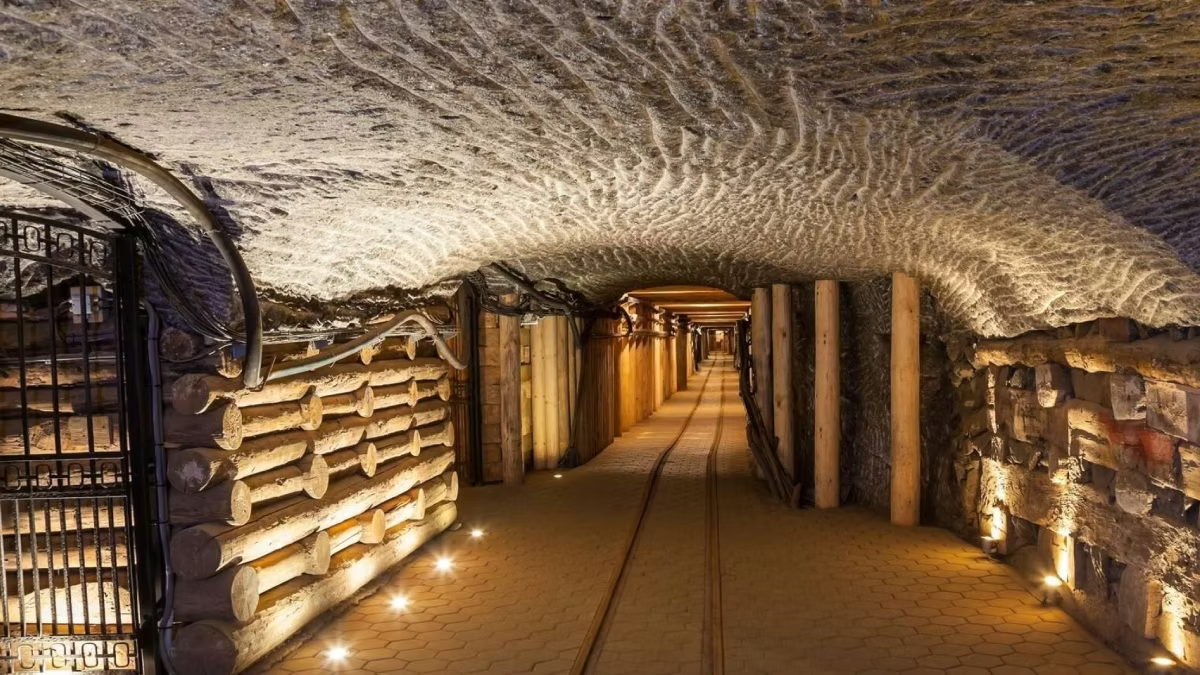
Most visitors to Wieliczka Salt Mine leave thinking they’ve seen a great deal. They’ve seen 22 chambers, 3.5 km of galleries, and two hours of underground Poland. What they’ve actually seen is less than 2% of the total mine. There are more than 2,350 chambers down here — the Tourist Route is the curated highlight reel of 700 years of human activity beneath the surface. Here’s a guide to the most significant chambers on the route.
Level 1 Chambers — 64 Metres Underground
Wieliczka Salt Mine has over 2,350 chambers in total, of which 22 are accessible on the Tourist Route across three levels (64–135 metres underground). Key chambers include the Copernicus Chamber (salt statue of the astronomer), the Staszic Chamber (36 metres high, the largest accessible space), the Janowice Chamber (Princess Kinga legend sculptures), and the Weimar Chamber (the underground lake). All chambers are carved from rock salt and contain sculptures, historical reconstructions, or notable geological features.
The tour begins immediately after the 380-stair descent from the Daniłowicz Shaft. The first level introduces the mine’s early history through chambers excavated from the 13th to 17th centuries.
Copernicus Chamber
The most photographed chamber on the first level. A monumental salt statue of Nicolaus Copernicus, installed in 1973 on the 500th anniversary of his birth, stands at the centre. Copernicus is believed to have visited the mine around 1493 — making him one of the first tourists in the mine’s history. The original wooden pit structures in this chamber are among the oldest preserved mining frameworks on the route.
Janowice Chamber
Located adjacent to the Copernicus Chamber, the Janowice Chamber features a group of salt sculptures depicting the legend of Princess Kinga — the Hungarian princess credited with the miraculous discovery of Wieliczka’s salt deposits. A miner hands Kinga the first lump of Wieliczka salt, her engagement ring visible within it. This is the founding myth of the mine, told at the very start of the journey underground.
Chapel of St. Anthony
The oldest surviving chapel in the mine, constructed in the 17th century in Baroque style. Though smaller than St. Kinga’s Chapel, it is notable as an example of underground Baroque interior design — chancel, nave, main altar and two side altars, all carved from green salt. Figures of the Crucified Christ, the Virgin and Child, and St. Anthony are carved into the main altar niche.
Sielec Chamber and the Burned Chamber
These adjacent chambers contain historical reconstructions of two defining features of early mining life. The Sielec Chamber depicts the earliest methods of salt extraction using wooden carts (Hungarian dogs), crates, and sledges, with a reconstruction of the horse-drawn transport system. The Burned Chamber recreates the work of the “Penitents” — miners who crawled through the underground passages at night with torches on extended poles, burning off methane gas concentrations before they could cause explosions. The blackened box cribs in the Burned Chamber show real traces of an underground fire from over 300 years ago.
Level 2 Chambers — Approximately 90 Metres Underground
Casimir the Great Chamber
A chamber dedicated to King Casimir III of Poland, who formalised the mining laws at Wieliczka in 1368 and whose income from salt revenues funded Poland’s first university. Revenue from Wieliczka accounted for as much as a third of the royal treasury during his reign. The chamber contains a bust of the king and displays related to the medieval expansion of the mine.
Pieskowa Skała Chamber
A beautifully carved chamber in bronze-toned salt, connecting the first and second levels. Named for the famous Polish castle of the same name, the chamber features carved architectural elements that echo the castle’s distinctive forms.
Józef Piłsudski Chamber
A chamber containing a green salt statue of the famous Polish statesman and soldier, as well as a figure of St. John Nepomuk at the bank of a small underground salt lake. The water in this chamber connects via low passages to other parts of the underground water network.
The Stanisław Staszic Chamber on level 3 is the largest accessible chamber, reaching a height of 36 metres — tall enough to accommodate Poland’s tallest native tree. It is used for events and contains the souvenir shop at the end of the Tourist Route.
Level 3 Chambers — 101–135 Metres Underground
St. Kinga’s Chapel
The crown jewel of the mine and the most visited chamber. See our dedicated St. Kinga's Chapel guide for the full breakdown.
Weimar Chamber — The Underground Lake
One of the most atmospheric stops on the route. A still, green-tinted saline lake fills the lower section of the chamber, its surface reflecting the illuminated salt ceiling in perfect stillness. The water is denser than the Dead Sea. The chamber takes its name from the Weimar period, and is reportedly a popular spot for marriage proposals — several guides confirm this is not unusual. For more detail, see our Underground Lake guide.
Stanisław Staszic Chamber
The largest accessible chamber on the Tourist Route, named after the great Polish naturalist and geologist. At 36 metres high, the chamber is vast enough that Poland’s tallest native tree (the Bartek Oak) could stand inside it. During World War II, the Germans attempted to use this chamber as an underground aircraft assembly plant — the project was abandoned as the Soviet offensive approached. Today it houses the souvenir shop, and its acoustics make it a popular concert venue.
Witold Budryk Chamber — Karczma Górnicza
Named after a professor at the University of Mining and Metallurgy in Kraków, this chamber houses the underground restaurant at 125 metres depth. See our Restaurant guide for full details.
Warsaw Chamber
A large underground space with a bandstand decorated with the mine’s logo sculpted in salt, a stage, and a mezzanine level. Used for mine festivities, concerts, sports events, and underground balls. The concept of underground dancing and entertainment at Wieliczka dates back centuries — the mine’s history records underground banquets and celebrations as far back as the 18th century.
The Cracow Saltworks Museum — Optional Extension
After the main Tourist Route chambers, visitors can continue into the underground exhibition of the Cracow Saltworks Museum on level 3. This adds approximately 1.5 km and 50 minutes, covering the extraordinary Maria Teresa and Saurau Chambers, a collection of horse mills (the largest such collection in Europe), and exhibitions on salt crystal formations and the industrial history of the mine. The extension is included in the standard Tourist Route ticket.
Frequently Asked Questions
How many chambers can you visit at Wieliczka Salt Mine?
The Tourist Route passes through 22 chambers across three levels. The Cracow Saltworks Museum extension adds approximately 17 additional chambers. The mine contains over 2,350 chambers in total — the Tourist Route covers less than 2% of the underground network.
What is the Copernicus Chamber at Wieliczka?
The Copernicus Chamber on level 1 contains a monumental salt statue of Nicolaus Copernicus, installed in 1973. It is named in honour of the astronomer who is believed to have visited the mine in 1493, making him one of the first known tourists in the mine’s history.
What is the tallest chamber in Wieliczka Salt Mine?
The Stanisław Staszic Chamber on level 3 reaches 36 metres in height, making it the largest accessible chamber on the Tourist Route. It was briefly earmarked by the Germans in WWII as an aircraft assembly plant, though the project was never completed.
Are the chambers different temperatures?
No — all chambers on the Tourist Route maintain a consistent temperature of 17–18°C (14–16°C on the Miners’ Route). The constant temperature is one of the mine’s defining characteristics and the basis for its historical reputation as a health destination.
Can any chambers be booked for private events?
Yes — St. Kinga’s Chapel, the Staszic Chamber, the Warsaw Chamber, and Karczma Górnicza are all available for private hire including concerts, weddings, and corporate events. Contact the mine’s event team through the official website.
