
Wieliczka vs Bochnia Salt Mine
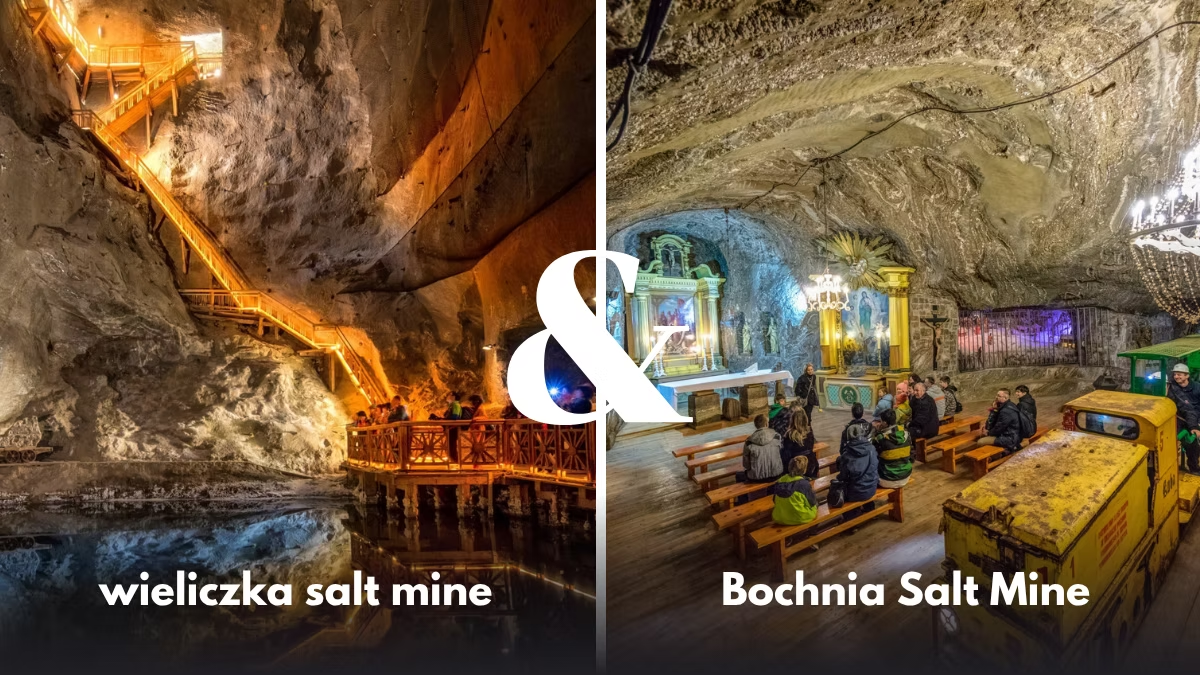
They are sister mines — inscribed together on the UNESCO World Heritage List, operated by the same company under Polish kings for centuries, and both carved into the same regional salt deposit. But Wieliczka and Bochnia feel like different places entirely. One is a grand, polished attraction that draws 1.5 million visitors a year. The other is quieter, older, deeper, and still surprising people who assumed Wieliczka had set the standard.
Side-by-Side Comparison
Wieliczka Salt Mine is more spectacular, more famous, more visited, and more expensive. Bochnia Salt Mine is older, less crowded, cheaper, more intimate, and offers unique experiences including underground boat rides and a 140-metre salt slide. For a first visit to the Kraków region, Wieliczka is the clear choice. For returning visitors, or those who prefer quieter, more adventurous experiences, Bochnia is worth the 30-minute extra journey.
| Wieliczka Salt Mine | Bochnia Salt Mine | |
|---|---|---|
| Distance from Kraków | 14 km | 45 km |
| Founded | 13th century | 1248 — older than Wieliczka |
| UNESCO inscription | 1978 (original list) | 2013 (added to serial property) |
| Annual visitors | ~1.5 million | Much fewer |
| Crowds | Significant in peak season | Generally uncrowded |
| Max depth (Tourist Route) | 135 metres | 248 metres |
| Max depth (overall) | 327 metres | 468 metres |
| Ticket price | ~156 PLN | Roughly half Wieliczka |
| St. Kinga's Chapel equivalent | ✓ | ✗ |
| Underground boat ride | ✗ | ✓ |
| Underground slide (140 m) | ✗ | ✓ |
| Health spa underground | ✓ | ✓ |
| Underground restaurant | ✓ (Karczma Górnicza) | ✓ |
| Underground sports field | ✗ | ✓ |
| Mining train ride | ✗ | ✓ |
| Multimedia exhibition | Limited | Extensive |
| English tours | Multiple daily | Typically one per day |
| Salt sculptures/chapels | Extensive | Present but fewer |
| Most suitable for | First-time visitors | Returning visitors, adventure seekers |
Wieliczka — Why It’s the Default Choice
Wieliczka Salt Mine is simply more spectacular in terms of visual impact. St. Kinga’s Chapel — 54 metres long, 18 metres high, every surface carved from salt — has no equivalent anywhere in the world, let alone at Bochnia. The density of sculptural work throughout the 22 chambers of the Tourist Route, the underground lake, the Staszic Chamber’s extraordinary height — these are things that are difficult to match.
The logistics are also significantly easier. Wieliczka is 14 km from Kraków, reachable in 21 minutes by train. English tours run every 30 minutes in peak season. Multiple tour operators offer pickup from Kraków hotels. For a visitor who has one day and wants to see something extraordinary near Kraków, Wieliczka is the answer.
The cost is higher — approximately 156 PLN for an adult foreign-language tour — but the visitor experience justifies it.
Wieliczka is more visually spectacular — particularly St. Kinga’s Chapel — and more accessible from Kraków. Bochnia is older, less crowded, cheaper, deeper, and offers unique experiences like underground boat rides and a 140-metre salt slide. For a first visit: Wieliczka. For returning visitors who want something different: Bochnia.
Bochnia — Why It Surprises People
Bochnia Salt Mine is actually older than Wieliczka — salt mining there is documented from 1248, making it the oldest known salt mine in Poland. It is deeper in its tourist section (reaching 248 metres, versus Wieliczka’s 135) and goes further underground overall (468 metres total depth).
The visitor experience is notably different. Tours run with much smaller groups — sometimes as few as 3–7 people — producing a more intimate, genuinely adventurous atmosphere. Reviewers who have visited both consistently describe Bochnia as more “authentic” — the mine feels less curated, more raw, more like a place that was actually worked rather than a space designed for visitors.
What Bochnia offers that Wieliczka doesn’t: – Underground boat ride — a 15-minute crossing by boat through underground passages (requires a group minimum) – 140-metre salt slide — a polished wooden corridor in a descending salt passage, used as a slide — popular with children and adults alike – Underground sports field — in the vast Ważyn Chamber, the mine’s largest space, with room for ball games 300 metres underground – Mining train ride — a journey through underground passages by rail – Multimedia exhibition — a contemporary installation explaining the mine’s history with technology that brings the medieval mining period to life
The ticket price is roughly half of Wieliczka’s, which makes it an attractive option for budget-conscious visitors.
The practical limitations: Bochnia is 45 km from Kraków (approximately 50 minutes by car or bus) and English-language tours typically run only once per day. Advance booking is essential. There is no direct regional train to Bochnia from Kraków’s main station.
Can You Visit Both in One Day?
Technically yes — they are 30 km apart. But with each mine requiring 2–3 hours underground, transport time between them (approximately 40 minutes), and the physical demands of both tours, this would be a very long underground day. Most visitors choose one or the other.
The most practical two-mine itinerary for serious mine enthusiasts: Day 1 — Wieliczka in the morning, return to Kraków for the afternoon. Day 2 — Bochnia for the morning English tour. Both in the same day is possible but not comfortable.
Which One Should You Visit?
Choose Wieliczka if: – This is your first visit to the Kraków region – You specifically want to see St. Kinga’s Chapel – You want easy access from Kraków by train – You want multiple daily English tours to choose from – You’re combining with other Kraków sightseeing
Choose Bochnia if: – You’ve already visited Wieliczka – You prefer smaller crowds and more intimate experiences – You want the unique experiences (boat ride, slide, mining train) – You’re travelling with children who want active elements – You have the time for the extra distance and limited English tour availability
Visit both if: – You have at least two days in the region – You have a specific interest in mining heritage and the UNESCO serial property as a whole
Frequently Asked Questions
Is Bochnia Salt Mine worth visiting if you’ve seen Wieliczka?
Yes — for visitors who want a different experience. Bochnia is less visually spectacular but more adventurous, less crowded, and offers unique activities (boat ride, slide, mining train) that Wieliczka doesn’t. The contrast between the two mines is part of what makes visiting both worthwhile.
Which salt mine is closer to Kraków?
Wieliczka Salt Mine at 14 km (21 minutes by train). Bochnia Salt Mine is approximately 45 km from Kraków (50 minutes by car or bus).
Which UNESCO salt mine is older?
Bochnia. Rock salt mining at Bochnia is documented from 1248, making it the oldest known salt mine in Poland. Wieliczka’s documented mining begins in the late 13th century. Both are inscribed together as the “Wieliczka and Bochnia Royal Salt Mines” on the UNESCO World Heritage List.
Does Bochnia Salt Mine have an underground chapel like Wieliczka?
Bochnia has underground chapels, but nothing comparable in scale or artistic achievement to Wieliczka’s St. Kinga’s Chapel. The chapel at Wieliczka remains unique among underground religious spaces globally.
How do I get to Bochnia Salt Mine from Kraków?
Bochnia is approximately 45 km east of Kraków. The most practical options are by car (approximately 50 minutes via the A4 motorway) or by bus/train to Bochnia town centre, followed by a short taxi or walk to the mine entrance. Trains from Kraków to Bochnia run regularly. A guided tour from Kraków is also available.
